Personal Agents Need Better Judgment
My daughter asked why I talk to dots all the time. Three lessons from building proactive agents, and the two things I most want my own agent to learn.
Human & AI · No. 02
6 min read
Over the weekend, my daughter asked, “Dad, why do you talk to dots all the time?”
Fair question. These days, dot helps compare vendor agreements with earlier redlines, research people before meetings, and plan family outings. For our Pinnacles trip, the questions ranged from parking and Junior Ranger activities to dinner after the hike. Asking it to follow coding-agent benchmarks and get a second opinion was messier. That exposed gaps in cross-session coordination.
The experience takes me back to 2024. At Google, I worked on a project called Golden Prompt. It was my baby. I spent days and nights designing proactive workflows for business administration, sales, and customer service. Email was the starting point: detect something worth acting on, investigate, and move the work forward. The ambition extended across Workspace and eventually to systems such as Salesforce and HubSpot.
Using personal agents daily has made three lessons from that work more concrete.
Nudges need an impact threshold
A genuine sales lead or an important customer issue deserves attention. A loosely relevant message usually does not. Precision and recall matter, but the threshold depends on the person, the relationship, and the cost of missing something. Flag everything, and the assistant trains its user to ignore it.
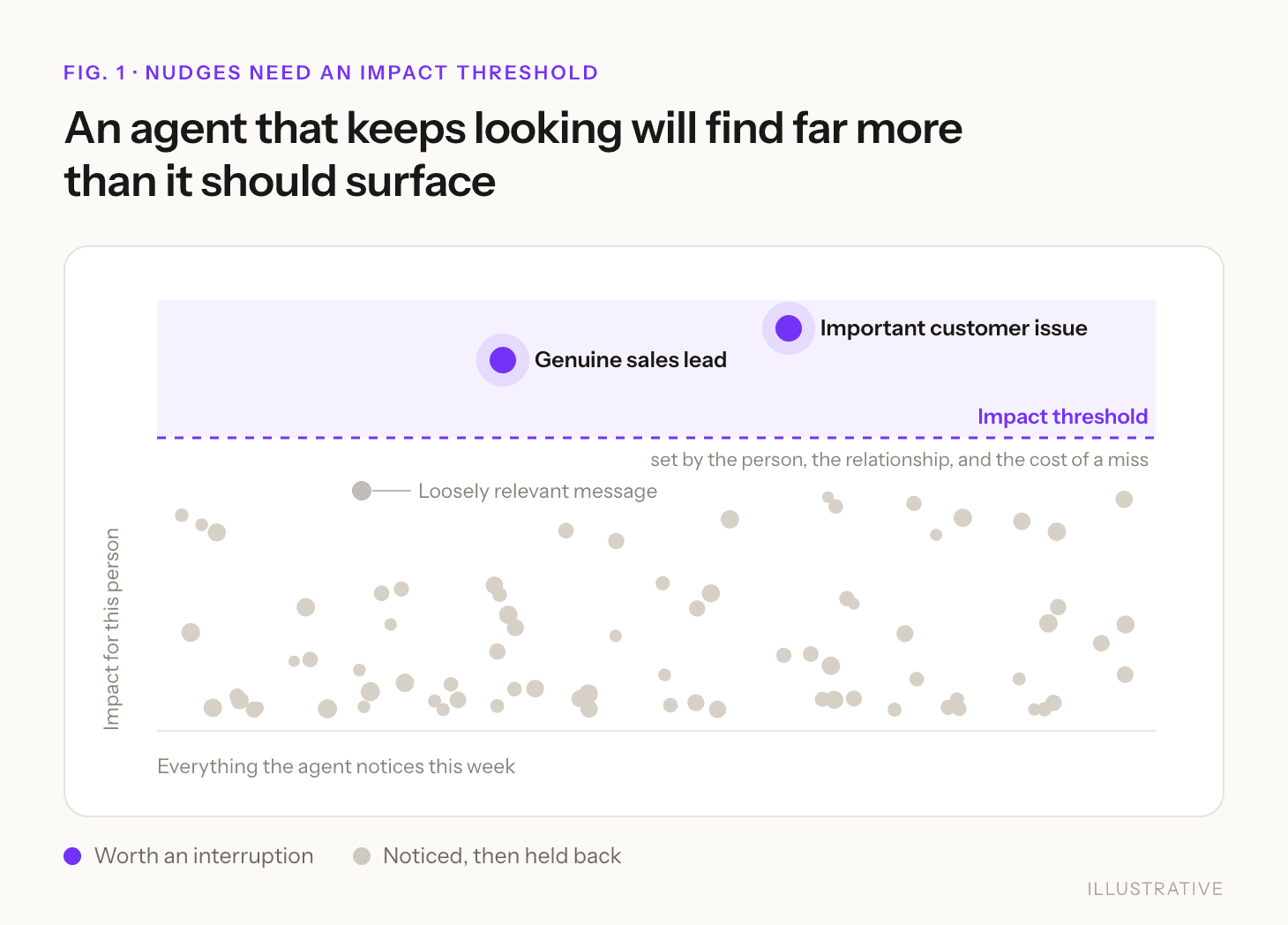
Figure 1. The more an agent looks, the more it finds. What reaches you should depend on the impact for you, not on how much was found.
We have faced the same problem at userapproved.ai. Our growth agents are proactive by design and work toward goals over time. That makes restraint essential. A growth opportunity or issue has to pass our impact criteria before the agent surfaces it. Those criteria are a guardrail for deciding whether an interruption is worthwhile.
The ability to keep looking for work creates an obligation to filter it. Finding something is not, by itself, a reason to notify someone.
Delegation should reduce the work left behind
When assigning work to a junior colleague, reasonable questions are welcome. What is unhelpful is getting the original task back before any investigation has happened. The same standard should apply to agents: do the groundwork, identify what remains uncertain, and come back with a prepared decision.
For a customer issue, that means reading the history, gathering evidence, and working out plausible next steps. Human involvement belongs where judgment or permission is needed. Otherwise, delegation becomes another coordination job.
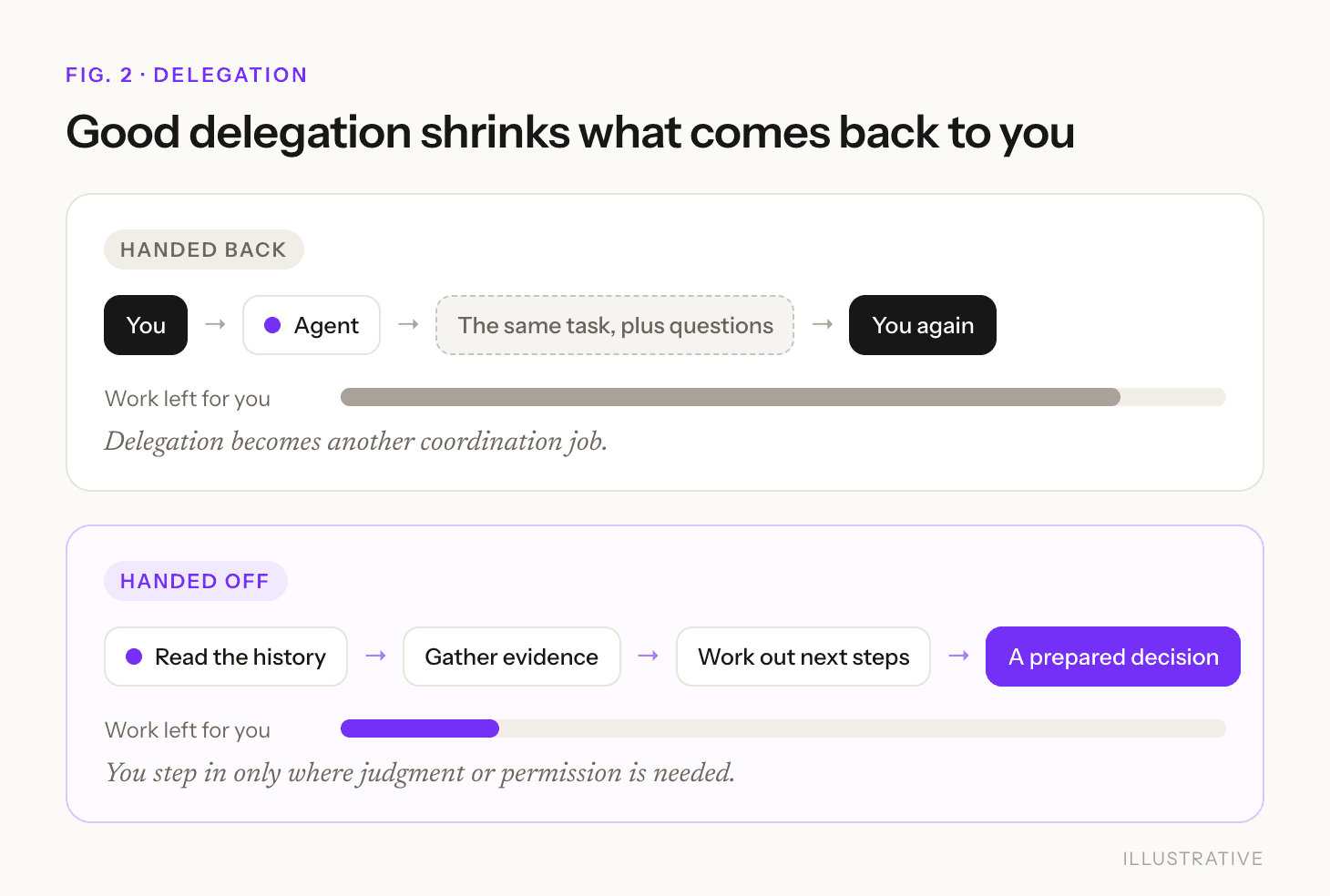
Figure 2. The measure of delegation is how much work comes back to you, not how much the agent did.
In 2024, getting that whole sequence to work was difficult. Retrieval could fail before a workflow began. Evaluating and simulating realistic sequences across applications was much harder than grading one answer. Cost and quality were in constant tension.
At userapproved.ai, we built our judgment engine by studying experienced growth and CRO experts: how they investigate problems, identify opportunities, prioritize strategies, and communicate with customers. Their decisions about what to investigate next were as important as their final recommendations.
Execution has improved since 2024, and more workflows are practical in daily use. The evaluation still has to cover the whole job: what was completed, whether the result was checked, and how much follow-up remained. A convincing final message is insufficient evidence.
Personalization must change decisions
At Google, we tried to make the system improve from feedback, with signals flowing into human-in-the-loop reinforcement learning. Even then, quality moved back and forth. Feed in too much Gmail data, and a use case in Docs or Bard would regress. Each app pulled the model in a different direction.
We also tried personalizing per user. It was too expensive, and the quality gain could not justify the cost.
The idea I was most passionate about went further: a model of the person. Your taste. How you handle email. How you write a LinkedIn post. How you talk to the people you love, which is nothing like how you talk to a vendor. Not the average user, but you. That idea is what led me to start Apex Agent Labs.
Fast forward to today, and the building blocks are finally here. OpenClaw made memory as simple as a Markdown file you can open and read. Hermes stacks several layers: personal context, searchable conversation history, and reusable procedures. At our company, we use knowledge graphs such as Neo4j so memory covers not only this week’s tasks but also the longer story of who you are. Personal agents are already good at handling my asks my way, even the proactive ones.
What carries over is still hard. Long conversations get compressed, and what the agent keeps decides what it knows about me next month. Deciding what to keep is already a judgment call.

Figure 3. What an agent remembers is only useful once it changes what the agent does next.
Still, more memory is useful only when it leads to a better next decision. An agent can remember a hundred facts about me and still make the same wrong call tomorrow. Retaining a fact and understanding what it means for today’s task are separate problems.
A useful test for any personal agent: what does it do differently because of what it knows about you? If the answer is nothing, that is storage, not personalization.
Two things I want my own agent to learn
Judge like me
I do not want a perfect god agent. I want mine.
My agent once surfaced several family tasks that my wife had already handled. The tasks were real. My follow-up was not needed. In our house, those always go to her, and I would never have replied to them myself. I had to tell the agent they were done.
That small moment explains why trust is hard. Until an agent knows which requests are mine to handle and which are not, I cannot hand it the daily tasks of a family. What I want it to learn is my filter: who owns what, what I ignore on purpose, when help is welcome, and when to leave something alone. It is the impact threshold from earlier, set by one person instead of an average user.
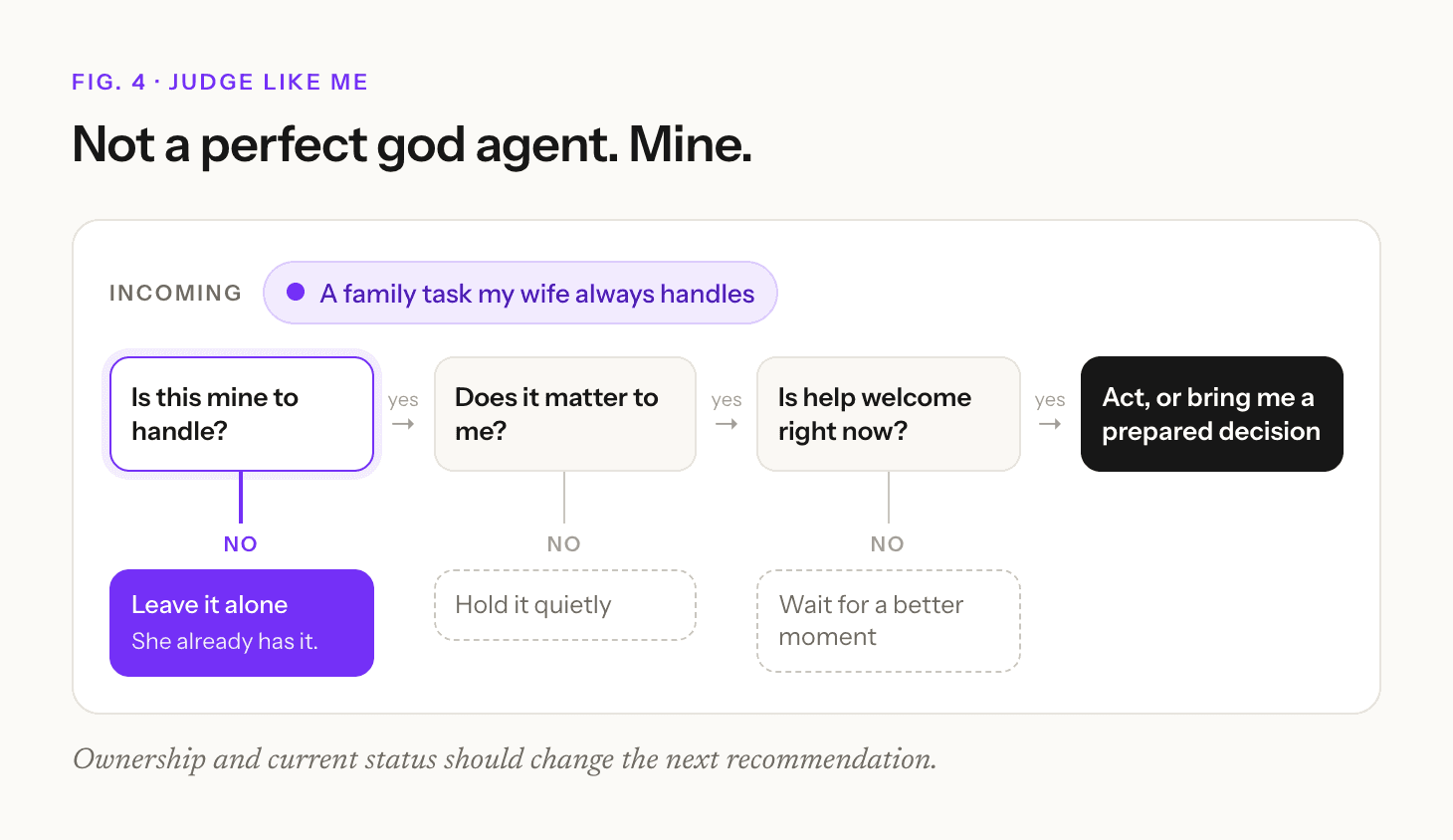
Figure 4. Before an agent asks whether something is important, it should ask whether it is mine.
Think in years, not tasks
Most agents today are still goal and task driven. Finish the request, close the loop. For a lot of work, that is right. For the things I care about most, it is not.
If my daughter asks an agent for help with homework, I do not want it to solve the problem for her. I want it to help her understand, so she can solve the next one on her own. A health agent faces the same choice. Today’s step count is easy to optimize. Being healthier a year from now is the goal that matters.
That takes a different kind of agent: one that holds a long-term goal, chooses a plan, checks whether the plan is helping, and revises it. If a plan is not working, it should try another way, not quietly trade the goal for an easier one. Persistence is only useful when the direction remains right.
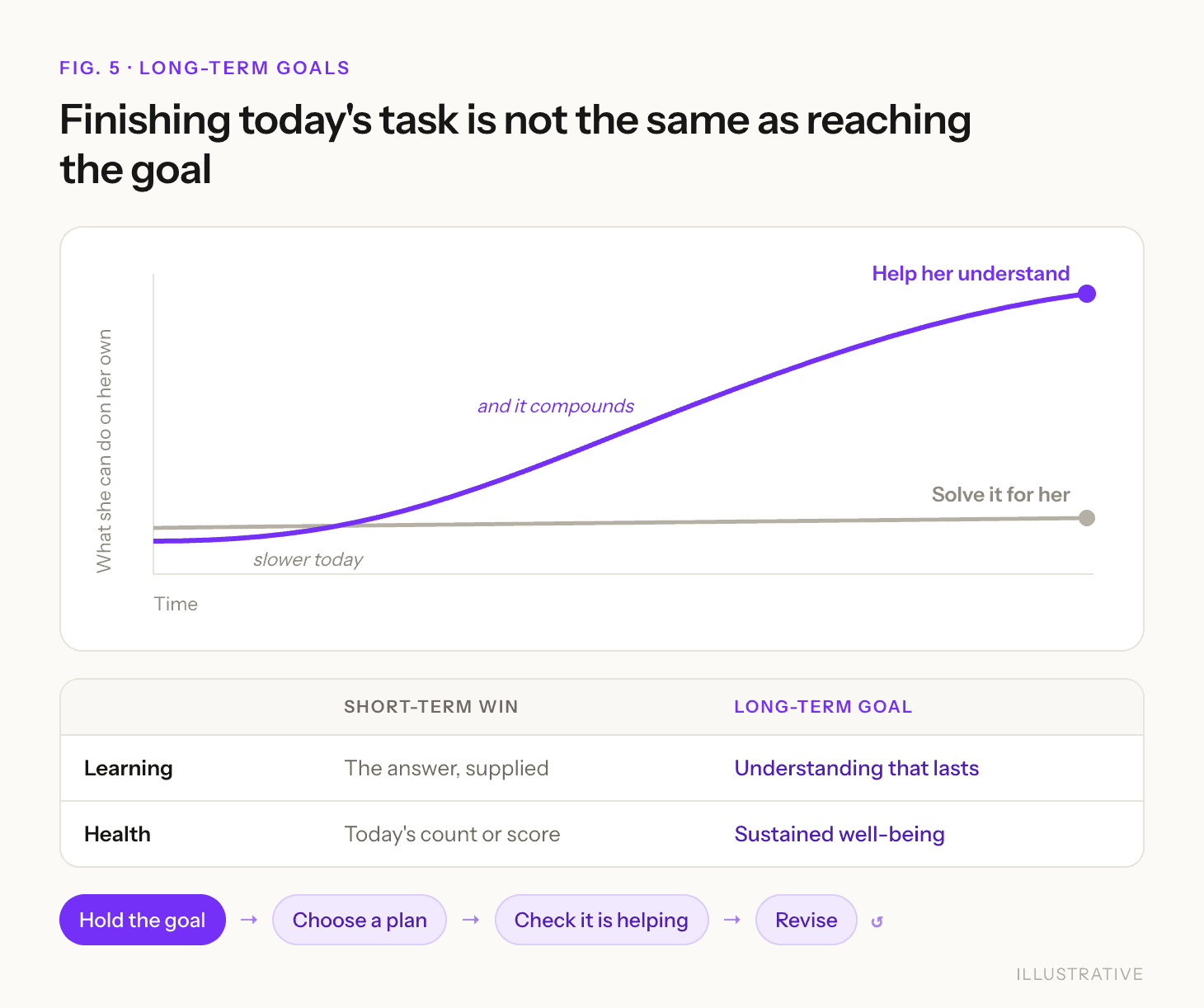
Figure 5. Optimizing the task in front of you can look like progress while the real goal stays flat.
At Kinalo, this is the problem we are working on. We are bringing personalization and growth goals into the same engine: understand the patient context, identify an opportunity, run an experiment, measure the result, and adjust the next action. Keeping that loop pointed at the long-term goal, rather than the easiest short-term win, remains an ongoing engineering problem.
My daughter noticed how often dot had entered our conversations. Someday she will have agents of her own. I hope they know her well enough to teach rather than tell. The more responsibility agents take on, the more their judgment matters. Helping them understand a person and choose useful actions over time is the work that keeps me interested.
Stay with me as I explore what AI makes possible and share what I learn from building with it.

Let’s exchange ideas about technology that helps people live better.
Let’s exchange ideas about technology that helps people live better.